Stouffer's-Style Lasagna
Home reconstruction
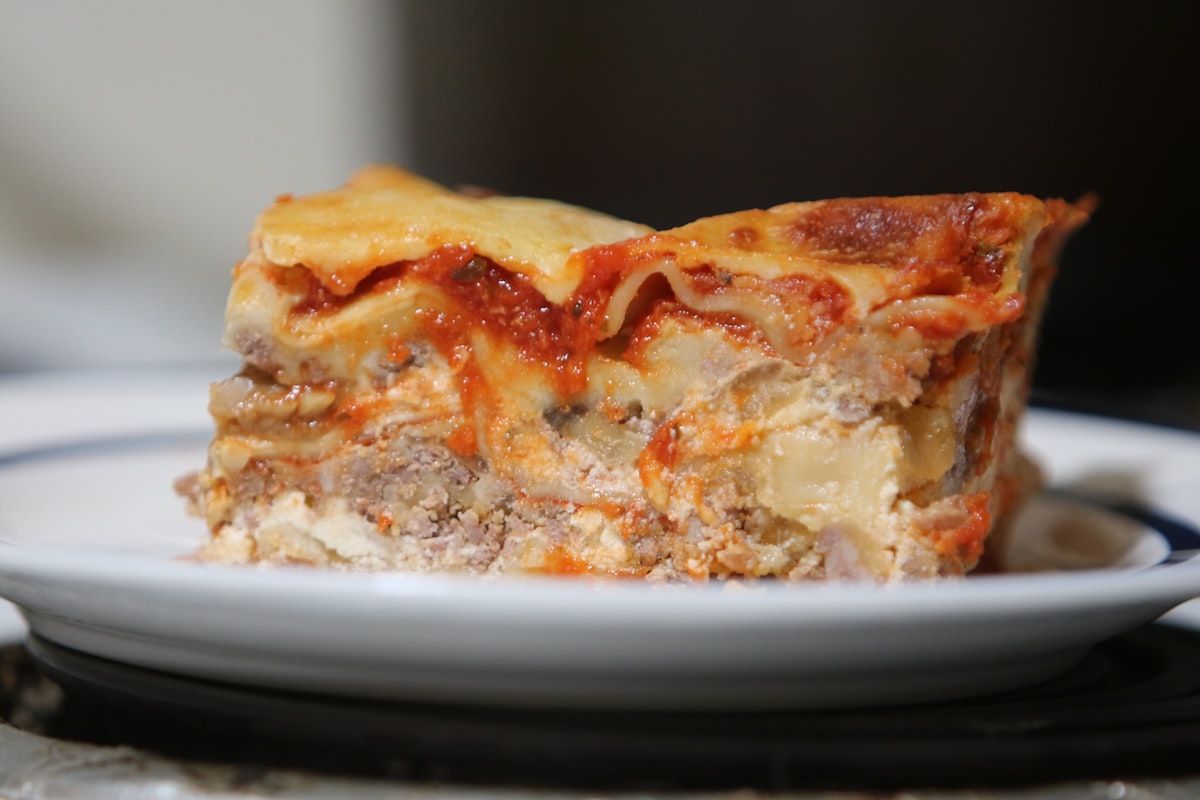
The cheese layer in a frozen American lasagna is smoother and creamier than a home ricotta layer, and people assume it is better ricotta. It is generally not ricotta at all.
Ricotta is a dry, granular cheese. Baked for an hour it loses more water and goes chalky, which is why home lasagna often has a slightly grainy white layer that sits separately from everything else.
Cottage cheese, blended smooth, holds far more water and stays creamy through a long bake. Blended, the curds disappear entirely and the texture is closer to a béchamel than to ricotta.
Jump to the recipe ↓Stouffer's-Style Lasagna
Serves 8 · Main
- Prep
- 30 min
- Cook
- 60 min
- Total
- 90 min + 20 min resting
Moderate10 steps
Ingredients
- 700 g beef mince, 1 onion, 4 cloves garlic
- 2 × 400 g tins chopped tomatoes, 3 tbsp purée
- 1 tsp each dried basil and oregano, 1/2 tsp sugar
- 700 g cottage cheese, 1 egg, 50 g parmesan, 2 tbsp parsley
- 12 lasagna sheets, 400 g mozzarella, 50 g parmesan
Method
- Brown the beef, then onion and garlic.
- Purée, tomatoes, herbs; simmer.30 minutes
- Blend the cottage cheese smooth; stir in the egg, parmesan, parsley, pepper.
- Oven to 190°C.
- Thin layer of sauce in the base.
- Layer pasta, cheese, sauce, mozzarella; repeat three times.
- Finish with pasta, sauce and the remaining cheeses.
- Covered, 40 minutes.40 minutes
- Uncovered, 20 minutes.20 minutes
- Rest before cutting.20 minutes
Blend it, do not just stir it
Unblended cottage cheese gives you visible curds in the finished dish and a watery layer as they release liquid.
Thirty seconds in a blender or food processor and it becomes a smooth, pourable-thick cream. That is the whole technique.
The egg is structural
One egg in the cheese layer. It sets as the lasagna bakes and binds the layer together, which is what lets you cut a clean slice rather than watching the filling slide out.
Without it, the cheese layer stays loose and the lasagna collapses on the plate.
Sauce the base of the dish first
A thin layer of sauce under the first sheet of pasta. It stops the pasta welding itself to the dish, and it gives the bottom layer liquid to hydrate in.
Every lasagna with a burnt, stuck bottom layer was assembled starting with dry pasta on a dry dish.
The twenty-minute rest is what makes it sliceable
Straight from the oven, lasagna is molten. The cheese is liquid, the sauce is thin, and there is nothing holding the layers together — it slides apart the moment you cut it.
Twenty minutes covered loosely with foil. The starches set, the cheese firms, and the sauce thickens. It is still hot.
This is the single most-skipped step and the most visible.
What you need
Meat sauce
- 700 g beef mince
- 1 onion, diced; 4 cloves garlic, minced
- 2 × 400 g tins chopped tomatoes
- 3 tbsp tomato purée
- 1 tsp dried basil, 1 tsp dried oregano, 1/2 tsp sugar
- salt and black pepper
Cheese layer
- 700 g cottage cheese
- 1 large egg
- 50 g parmesan, grated
- 2 tbsp chopped parsley
- 1/2 tsp black pepper
To assemble
- 12 lasagna sheets
- 400 g mozzarella, grated
- 50 g parmesan, grated
Method
- Brown the beef, then the onion 5 minutes and the garlic 1 minute.
- Purée, tomatoes, herbs, sugar and seasoning. Simmer 30 minutes until thick.
- Blend the cottage cheese smooth, then stir in the egg, parmesan, parsley and pepper.
- Oven to 190°C.
- Thin layer of sauce in the base of the dish.
- Layer: pasta, cheese mixture, sauce, mozzarella. Repeat three times.
- Finish with pasta, sauce, and the remaining mozzarella and parmesan.
- Cover with foil and bake 40 minutes.
- Uncover and bake 20 minutes more, until browned and bubbling.
- Rest 20 minutes before cutting.
Cover, then uncover
Covered, the pasta steams and hydrates properly. Uncovered from the start, the top sheet dries into something leathery before the middle is done.
The last twenty minutes uncovered is where the browning happens.
The half teaspoon of sugar
Tinned tomatoes vary a lot in acidity. Half a teaspoon takes the metallic edge off without making the sauce sweet. Taste first — some tomatoes need none.
Storing
Four days in the fridge and better on day two, once everything has set together.
Three months frozen, whole or in portions. Thaw overnight and reheat covered at 180°C for 30 minutes.
Questions people ask
Cottage cheese or ricotta?
Cottage cheese, blended smooth. Ricotta is dry and granular and goes chalky over a long bake.
Do I have to blend it?
Yes. Unblended you get visible curds and a watery layer as they release liquid.
Why the egg?
It sets during baking and binds the cheese layer, which is what lets you cut a clean slice.
Why sauce the base of the dish?
So the bottom pasta sheet has liquid to hydrate in and does not weld itself to the dish.
Do I need to rest it?
Twenty minutes, and it is the most visible step in the recipe. Cut straight from the oven, it slides apart.
Can I freeze it?
Yes, three months. Thaw overnight and reheat covered at 180°C for 30 minutes.
This is a home reconstruction, not Stouffer's recipe. Their formula is proprietary.
More like this
 Home reconstructionApplebee's Spanish Rice: Toast the Rice in Oil Until It ColoursSkip the toasting step and you have made tomato rice pudding. It takes four minutes and it is the whole dish.
 Home reconstructionArby's Reuben: Squeeze the Sauerkraut DrySauerkraut is packed in brine. Straight from the jar it turns rye bread to pulp before the cheese has melted.
 Home reconstructionBahama Breeze Empanadas: The Filling Has to Be ColdWarm filling melts the fat in the pastry before it reaches the oil, and the seal fails. Chilling it is the whole fix.