Prime Rib
Home reconstruction
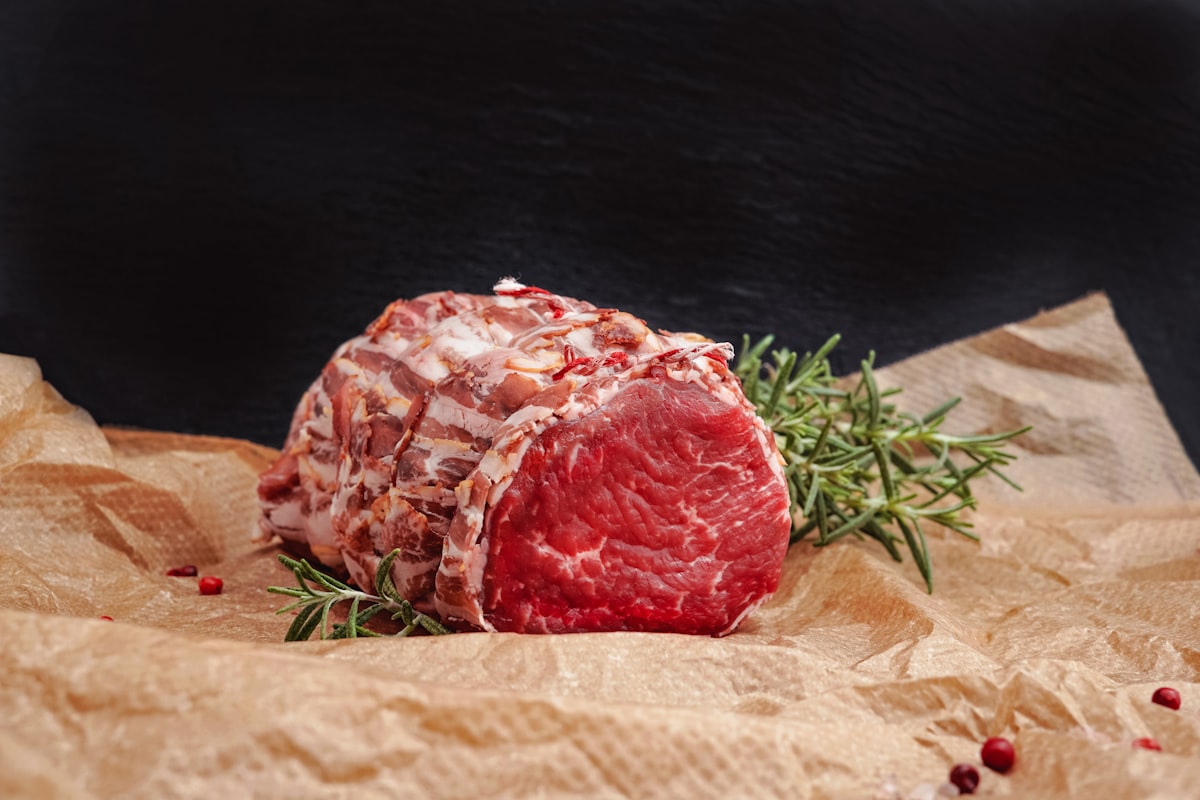
Two decisions determine whether an expensive joint comes out well, and both are made before it goes in the oven.
Salt it 24 hours ahead, uncovered, in the fridge.
Cook it low and sear it at the end, not the other way round.
Jump to the recipe ↓Prime Rib
Serves 8 · Main
- Prep
- 20 min
- Cook
- 150 min
- Total
- 170 min + 24 hr salting
Moderate9 steps, over two hours
~940 kcal per servingestimated
Ingredients
- 2.5 kg bone-in prime rib
- 2 tbsp coarse salt
- 1 tbsp coarse black pepper
- 4 cloves garlic, minced
- 2 tbsp softened butter
- 1 tbsp each chopped rosemary and thyme
Method
- Salt all over a day ahead; uncovered on a rack in the fridge.
- Out of the fridge before cooking.2 hours
- Oven to 120°C.
- Rub with the butter, garlic, pepper and herbs.
- On a rack, bones down.
- Roast to 4°C below target, about 2–2.; check from 90 minutes.5 hours
- Rest tented 30 minutes.30 minutes
- Oven to 250°C; back in for the crust.6–8 minutes
- Rest and carve across the grain.10 minutes
Why dry brining beats salting on the day
Salt on the surface draws water out of the meat. That water dissolves the salt, and the resulting brine gets reabsorbed, carrying seasoning well below the surface. It also disrupts proteins so they hold onto moisture during cooking.
A joint salted an hour before cooking is in the worst part of this process — the water has come out and has not gone back in yet, so the surface is wet and the inside is unseasoned.
Either salt it 24 hours ahead, or salt it immediately before it goes in the oven. The middle ground is worse than both.
Uncovered in the fridge, the surface also dries out, and a dry surface is what lets you get a crust later.
Why low-then-sear beats sear-then-low
The classic method blasts the joint at 230°C then drops the heat. The problem is that the outer centimetre or two overcooks while the heat travels inward, so you get a grey, well-done band around a pink middle.
Cooking low — 120°C — means the whole joint climbs in temperature nearly together. Then a short blast at the end browns the outside in minutes, before that heat has time to penetrate.
The result is edge-to-edge pink with a crust on the outside, which is what you paid for.
The thermometer is not optional
Prime rib is judged by internal temperature and nothing else. Time per pound is a rough guide that varies with the joint's shape, its starting temperature and your oven.
- Rare 49°C
- Medium rare 54°C
- Medium 60°C
Pull it 3–4°C below your target. The temperature keeps climbing while it rests.
What you need
- 2.5 kg bone-in prime rib (3 bones)
- 2 tbsp coarse salt
- 1 tbsp black pepper, coarsely ground
- 4 cloves garlic, minced
- 2 tbsp softened butter
- 1 tbsp chopped rosemary
- 1 tbsp chopped thyme
Method
- A day ahead: pat the joint dry, salt it all over, and leave it uncovered on a rack in the fridge.
- On the day, take it out 2 hours before cooking. A fridge-cold joint cooks unevenly.
- Oven to 120°C.
- Mix the butter, garlic, pepper and herbs and rub it over the joint. Do not add more salt.
- Onto a rack in a roasting tin, bones down — they act as a natural trivet.
- Roast to 4°C below your target, roughly 2 to 2.5 hours for medium rare. Start checking at 90 minutes.
- Out of the oven, tented loosely, for 30 minutes.
- Oven up to 250°C. Back in for 6–8 minutes to build the crust.
- Rest 10 more minutes, then carve.
The rest in the middle
Resting before the sear rather than after is deliberate. It lets the temperature even out through the joint, and it means the final blast is doing nothing but browning.
You can hold it at this stage for up to an hour, which is genuinely useful when you are cooking everything else.
Carving
Run a knife along the bones to free the joint, then slice across the grain. Thick slices, about 1.5 cm — thin slices of prime rib lose their heat and their texture.
Storing
Four days in the fridge. Cold rare beef is excellent in sandwiches and reheating it is mostly a way of making it well done.
If you must reheat, 120°C until just warm, or dip slices in hot beef stock for a few seconds.
Questions people ask
Should I sear first or last?
Last. Searing first overcooks the outer layer while the heat travels inward, which is what causes the grey band.
How far ahead should I salt it?
24 hours, uncovered in the fridge. An hour ahead is the worst option — the surface is wet and the inside is not yet seasoned.
What internal temperature?
54°C for medium rare, pulled at about 50°C. It climbs while it rests.
Do I need a thermometer?
Yes. Time per pound varies too much with shape and starting temperature to be reliable on a joint this expensive.
Can I rest it for a long time?
Up to an hour between the low roast and the final sear, which makes timing the rest of the meal much easier.
Bones up or down?
Down. They hold the meat off the tin and conduct heat gently into the base.
This is a general method for prime rib rather than any particular published recipe, including Ree Drummond's. Where a cook has published their own version, their instructions are theirs.
More like this
 Home reconstructionApplebee's Spanish Rice: Toast the Rice in Oil Until It ColoursSkip the toasting step and you have made tomato rice pudding. It takes four minutes and it is the whole dish.
 Home reconstructionArby's Reuben: Squeeze the Sauerkraut DrySauerkraut is packed in brine. Straight from the jar it turns rye bread to pulp before the cheese has melted.
 Home reconstructionBahama Breeze Empanadas: The Filling Has to Be ColdWarm filling melts the fat in the pastry before it reaches the oil, and the seal fails. Chilling it is the whole fix.