Golden Corral Meatloaf
Home reconstruction
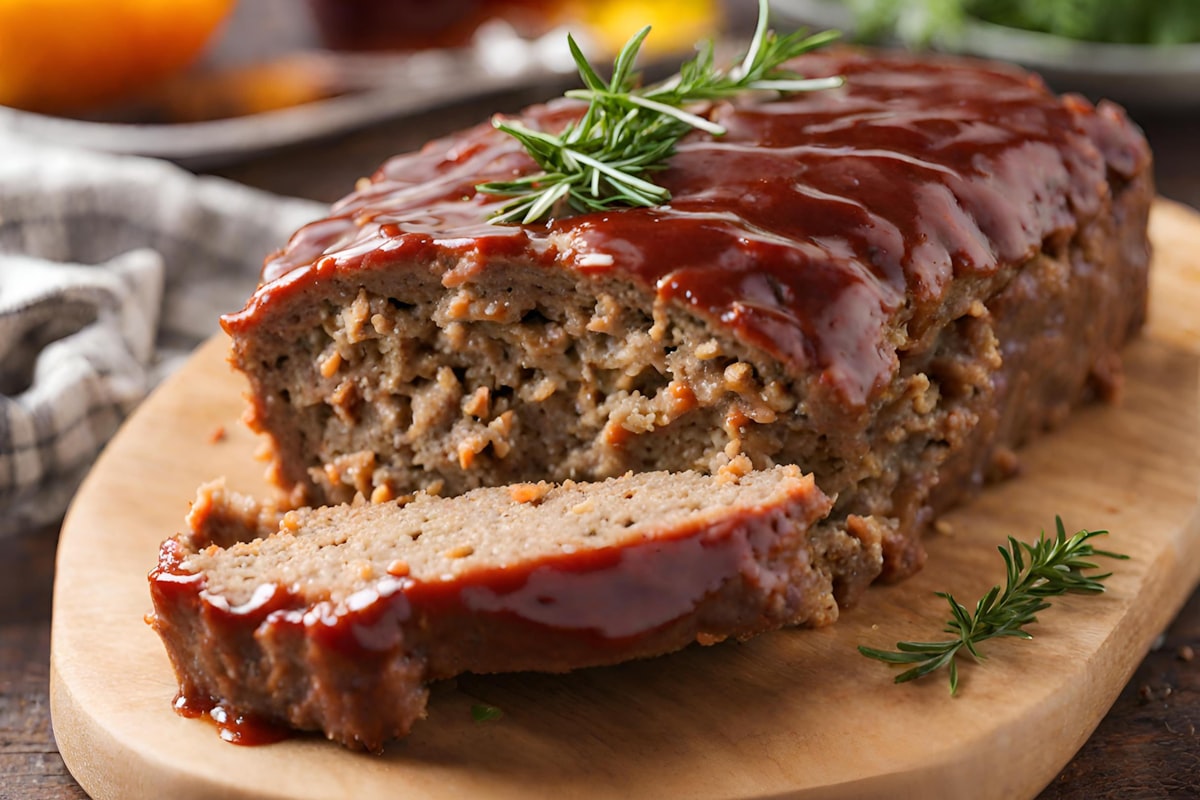
Cafeteria meatloaf has a particular texture — soft, moist, sliceable without crumbling — and it comes from a technique with a French name that almost no American recipe mentions: a panade.
A panade is bread soaked in milk, mashed to a paste, and mixed into the meat. It is not the same as adding dry breadcrumbs, and the difference is large.
Jump to the recipe ↓Golden Corral Meatloaf
Serves 8 · Main
- Prep
- 20 min
- Cook
- 70 min
- Total
- 90 min
Easy9 steps
~270 kcal per servingestimated
Ingredients
- 600 g beef mince (80/20), 300 g pork mince
- 3 slices stale white bread, crusts off
- 120 ml whole milk
- 1 onion, diced and softened
- 2 cloves garlic, minced
- 2 large eggs
- 2 tbsp Worcestershire sauce
- 1 tsp salt, 1 tsp black pepper, 1 tsp dried thyme
- Glaze: 120 ml ketchup, 2 tbsp brown sugar, 1 tbsp cider vinegar, 1 tsp mustard
Method
- Oven to 175°C.
- Soak the bread in milk; mash to a paste.5 minutes
- Soften the onion and garlic; cool.
- Combine everything gently.
- Mix by hand until just combined.
- Shape free-form on a lined tray.
- Brush half the glaze on.
- Bake, glaze again, bake 20 more to 71°C.50 minutes
- Rest before slicing.10 minutes
Why dry breadcrumbs give you a different loaf
Dry crumbs absorb liquid from the meat itself. You end up with less free moisture in the mixture, and the meat proteins bind more tightly to each other. The result is firm and springy — good in a meatball, dense in a meatloaf.
A milk-soaked panade brings its own liquid in. The starch gel physically gets between the meat proteins and stops them linking into a tight network, and the milk's moisture stays trapped in that gel during cooking rather than being squeezed out.
Softer, wetter, and it still holds together when sliced.
Use stale white bread
Fresh bread turns to glue rather than a paste. Slightly stale sandwich bread, or bread left out for an hour, is what you want. Crusts off.
Three slices to 900 g of meat, in 120 ml of milk.
Beef and pork together
All beef gives a firmer, drier loaf. Pork brings fat and a softer texture, and the two together are the standard for a reason.
Two parts beef to one part pork. If you can only get beef, use 80/20 rather than lean mince — the fat is doing structural work, not just adding flavour.
The glaze goes on twice
Once before baking and once with twenty minutes left. The first coat cooks in and seasons the surface. The second sits on top and stays glossy.
A single coat applied at the start either burns over an hour or, if you use less, disappears into the meat entirely.
What you need
For the loaf
- 600 g beef mince (80/20)
- 300 g pork mince
- 3 slices stale white bread, crusts removed
- 120 ml whole milk
- 1 onion, finely diced
- 2 cloves garlic, minced
- 2 large eggs
- 2 tbsp Worcestershire sauce
- 1 tsp fine salt
- 1 tsp black pepper
- 1 tsp dried thyme
For the glaze
- 120 ml tomato ketchup
- 2 tbsp light brown sugar
- 1 tbsp cider vinegar
- 1 tsp mustard
Method
- Oven to 175°C.
- Tear the bread into the milk and leave 5 minutes, then mash to a paste with a fork.
- Soften the onion and garlic in a little oil for 5 minutes and let them cool. Raw onion in a meatloaf stays crunchy and leaks water.
- Combine the meats, panade, cooled onion, eggs, Worcestershire, salt, pepper and thyme.
- Mix with your hands until just combined. Overworking makes it tough — the same reason you do not overwork a burger.
- Shape into a loaf on a lined tray, not in a tin. A free-form loaf browns on all sides; a tin steams the sides and collects grease.
- Mix the glaze and brush half over.
- Bake 50 minutes. Brush the rest of the glaze on and bake 20 minutes more, to an internal 71°C.
- Rest 10 minutes before slicing.
Why not a loaf tin
Two reasons. The sides never brown, so five of the six faces are pale and steamed. And the rendered fat has nowhere to go, so the loaf sits in it and the bottom becomes greasy.
On a tray, the fat runs off and every surface gets heat.
Storing
Four days in the fridge, and it slices far better cold than hot. Cold meatloaf sandwiches are a genuine reason to make it.
Three months frozen, whole or in slices. Slices reheat straight from frozen.
Questions people ask
What is a panade and why does it matter?
Bread soaked in milk and mashed to a paste. It keeps the meat proteins from binding tightly, which is what makes a meatloaf soft rather than springy.
Can I use dry breadcrumbs instead?
You can, and the loaf will be firmer and drier. Dry crumbs pull moisture out of the meat; a panade brings moisture in.
Loaf tin or baking tray?
Tray. A tin steams the sides and traps the rendered fat under the loaf.
Why cook the onion first?
Raw onion stays crunchy through baking and releases water into the mixture.
Why glaze twice?
The first coat seasons the surface as it cooks in; the second stays glossy. One coat either burns or vanishes.
Does it have to rest?
Ten minutes. Sliced straight from the oven it crumbles.
This is a home reconstruction, not Golden Corral's recipe. Their formula is proprietary.
More like this
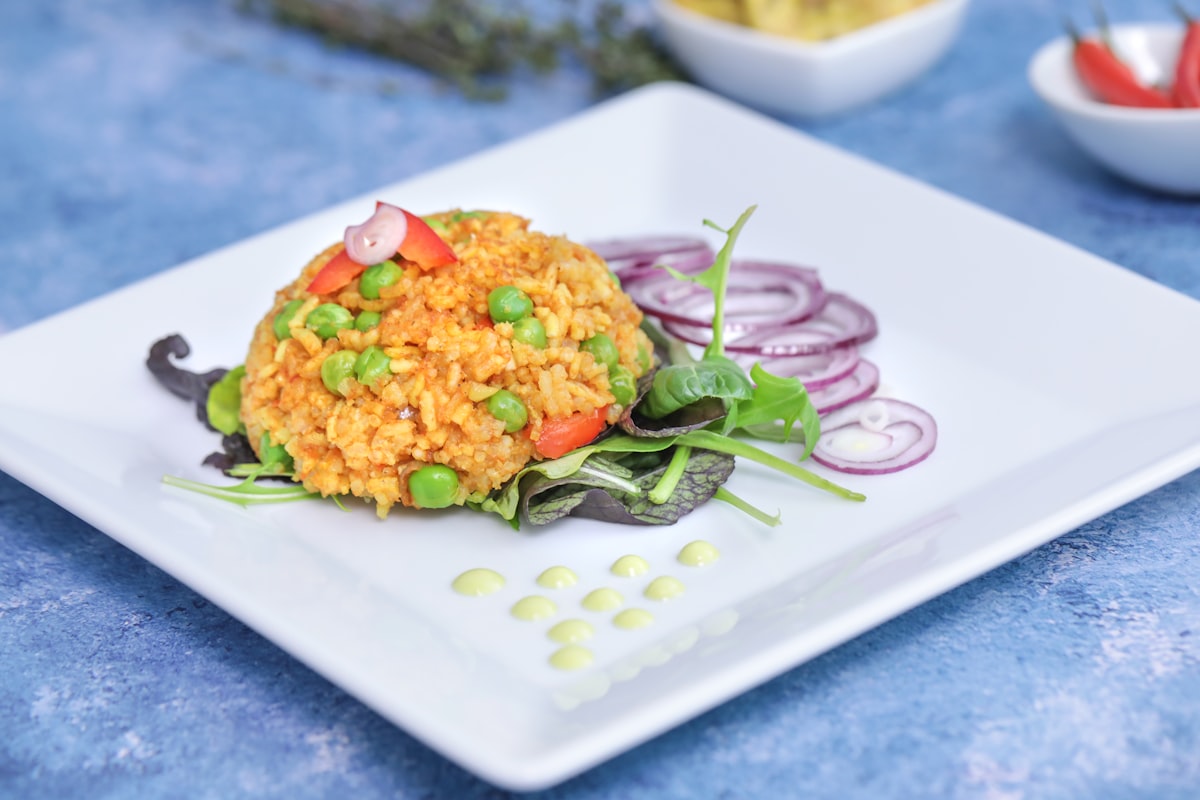 Home reconstructionApplebee's Spanish Rice: Toast the Rice in Oil Until It ColoursSkip the toasting step and you have made tomato rice pudding. It takes four minutes and it is the whole dish.
 Home reconstructionArby's Reuben: Squeeze the Sauerkraut DrySauerkraut is packed in brine. Straight from the jar it turns rye bread to pulp before the cheese has melted.
 Home reconstructionBahama Breeze Empanadas: The Filling Has to Be ColdWarm filling melts the fat in the pastry before it reaches the oil, and the seal fails. Chilling it is the whole fix.