Cava Roasted Sweet Potato
Home reconstruction
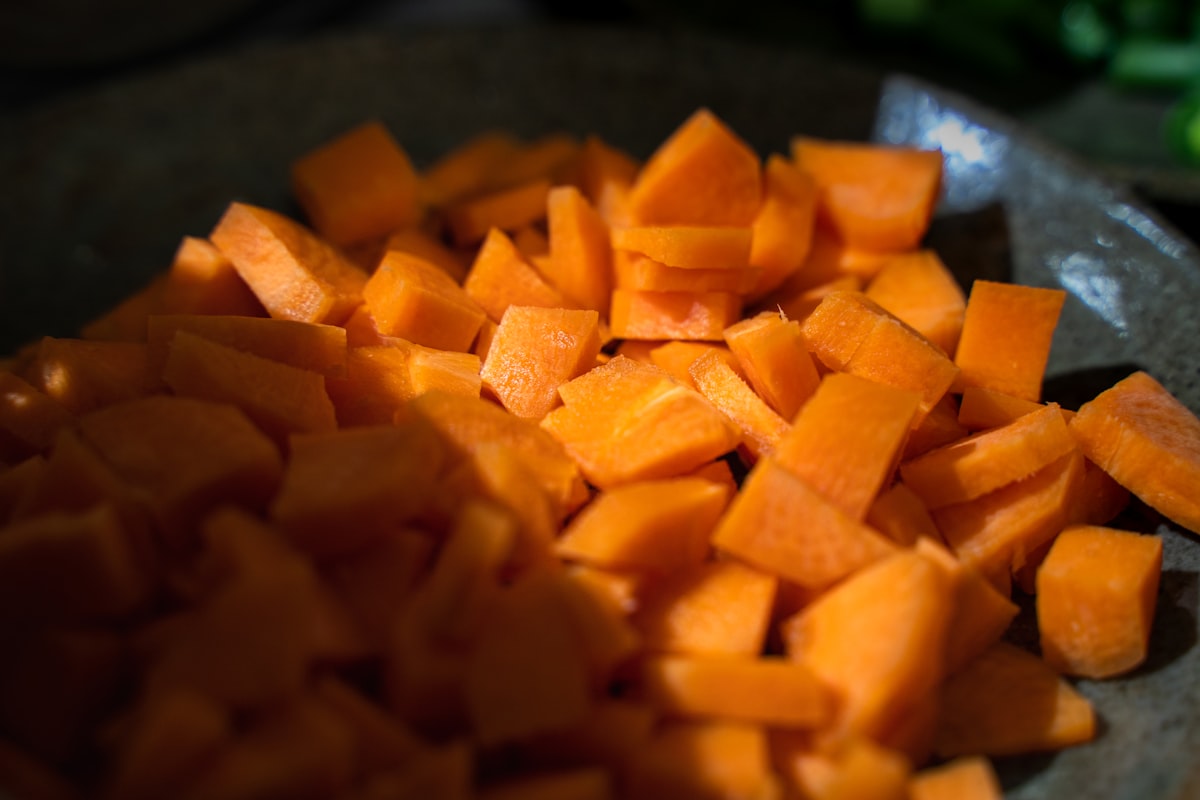
Sweet potato roasts badly for a specific reason: it holds a lot of water and it holds a lot of sugar. The water steams, and the sugar burns once the water has gone. The gap between the two is narrow.
The single biggest variable is how much room the pieces have on the tray. More than temperature, more than oil, more than cut size.
Jump to the recipe ↓Cava Roasted Sweet Potato
Serves 4 · Side
- Prep
- 10 min
- Cook
- 30 min
- Total
- 40 min
Moderate7 steps, 11 ingredients
~300 kcal per servingestimated
Ingredients
- 900 g sweet potatoes, in 3 cm chunks
- 3 tbsp olive oil
- 1 tsp ground cumin
- 1 tsp smoked paprika
- 1/2 tsp ground coriander
- 1/2 tsp ground cinnamon
- 1/4 tsp cayenne pepper
- 1 tsp fine salt
- 1/2 tsp black pepper
- juice of half a lemon
- fresh parsley or coriander
Method
- Oven to 200°C with two trays heating inside.
- Toss the potato with oil first, then the spices and salt.
- Spread on the hot trays with a gap around every piece.
- Roast; turn once.20 minutes
- Another until the edges darken.10–12 minutes
- Lemon juice on while hot.
- Herbs last.
Why crowding wrecks it
Each piece releases steam as it heats. On a crowded tray that steam has nowhere to go — it sits in the gaps and keeps the surface of every piece wet. Wet surfaces cannot get above 100°C, so nothing browns and everything softens.
A gap the width of a piece, all round. In practice that means two trays for four servings, and it is worth the washing up.
Use the largest trays you own, and heat them in the oven first. Sweet potato hitting hot metal starts browning immediately instead of slowly warming up while it leaks.
Cut them larger than you think
Small dice has more surface area per gram, which sounds good for browning but means it collapses to mush before the outside colours.
3 cm chunks. Big enough to survive 30 minutes, small enough to cook through.
The sugar problem
Sweet potato has enough sugar to caramelise properly, and enough to burn. 200°C is the useful window. At 220°C the edges blacken while the middles are still raw; at 180°C it dries out slowly without ever colouring.
Turn them once, at the 20 minute mark, not every ten minutes. Every turn puts an uncoloured face down and resets the browning.
What you need
- 900 g sweet potatoes, peeled, in 3 cm chunks
- 3 tbsp olive oil
- 1 tsp ground cumin
- 1 tsp smoked paprika
- 1/2 tsp ground coriander
- 1/2 tsp ground cinnamon
- 1/4 tsp cayenne pepper
- 1 tsp fine salt
- 1/2 tsp black pepper
- juice of half a lemon, to finish
- fresh parsley or coriander
Method
- Oven to 200°C with two large trays inside.
- Toss the sweet potato with the oil, then all the spices and the salt.
- Spread across both hot trays with a gap around every piece.
- Roast 20 minutes, then turn once.
- Another 10–12 minutes, until the edges are dark and the middles are soft.
- Lemon juice over them the moment they come out, while they are hot enough to absorb it.
- Herbs on last.
Oil first, then spices
Toss with oil before the spices go on. Oil coats the surface evenly and the spices then stick to the oil.
The other way round, the dry spices land on dry potato, and most of them end up on the tray where they burn.
The lemon at the end
Roasted sweet potato is sweet, soft and rich, and after three or four mouthfuls that becomes monotonous. Acid resets the palate.
It has to go on hot. Lemon juice on cold roasted vegetables sits on the surface; on hot ones it partly absorbs and partly evaporates, leaving the flavour without the wetness.
Storing
Four days in the fridge. They lose crispness completely — reheat at 200°C for 8 minutes to bring some of it back, or accept them soft in a bowl or salad, which is how Cava serve them anyway.
They freeze for three months, cooked, and are best reheated straight from frozen.
Questions people ask
Why is my roasted sweet potato soggy?
The tray was crowded. Steam released by each piece keeps every surface wet, and wet surfaces cannot brown.
What temperature?
200°C. Hotter burns the sugars before the middle cooks; cooler dries it out without colouring.
How big should I cut them?
About 3 cm. Smaller pieces collapse before the outside browns.
Should I peel them?
Cava's are peeled. The skin is edible and gets chewy when roasted, so it comes down to preference.
Why toss with oil before the spices?
The oil gives the spices something to stick to. Dry spices on dry potato mostly fall off and burn on the tray.
Do I need to turn them?
Once, at 20 minutes. Turning repeatedly keeps putting uncoloured faces down and resets the browning each time.
This is a home reconstruction, not Cava's recipe. Their spice blend is proprietary.
More like this
 Home reconstructionCava Braised Lamb: Shoulder, and Three Hours Is the Short VersionLamb that shreds is collagen that has turned to gelatin. That conversion is slow and there is no way to hurry it.
 Home reconstructionCava Cabbage Slaw: Massage the Cabbage With the DressingTossed, the dressing sits on the outside. Worked in with your hands for a minute, it goes into the leaf.
 Home reconstructionCava Lentils: Salt Them Early, Not LateThe advice that salt keeps lentils hard is wrong, and following it gives you bland lentils with mush around the edges.