Paul Hollywood's Cinnamon Rolls
Published recipe
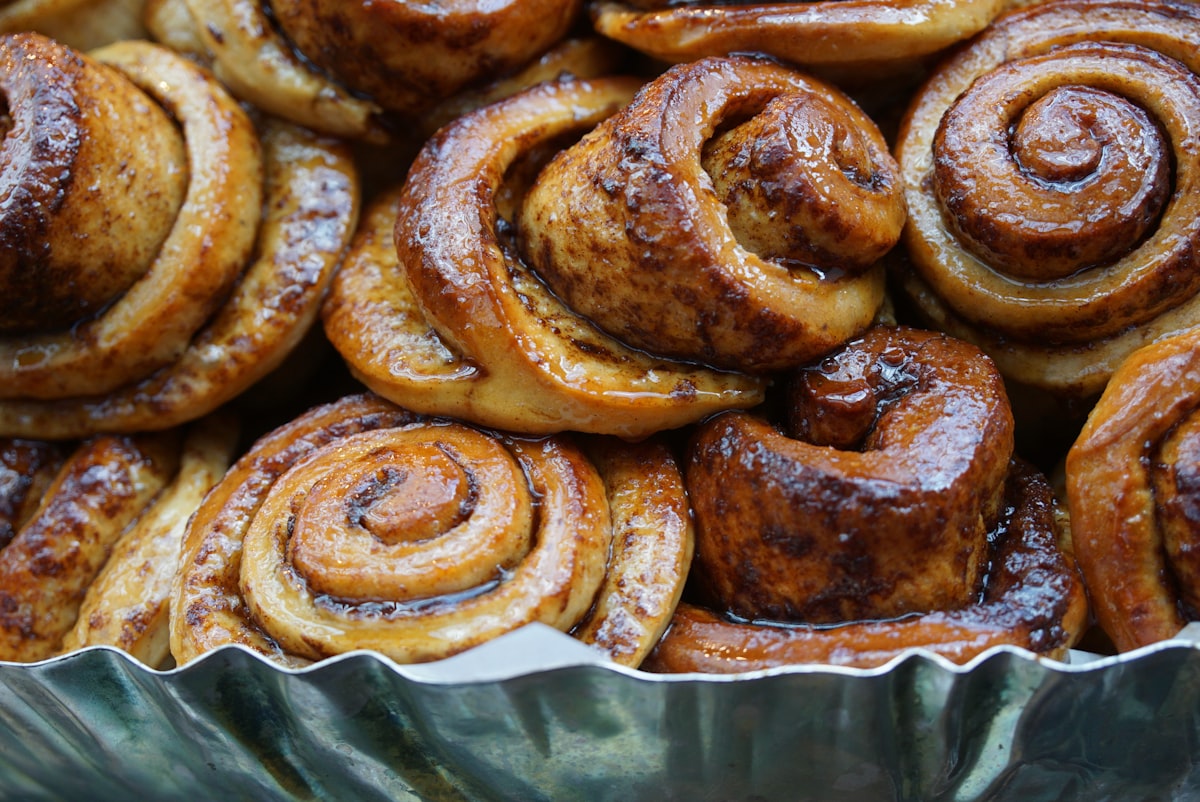
Paul Hollywood's versions of this are published — on the BBC and in his baking books — so this is not a secret being reverse-engineered. What is useful is understanding why his dough behaves differently from the American cinnamon roll you have probably made before, because that difference is the whole thing.
Jump to the recipe ↓Paul Hollywood's Cinnamon Rolls
12 rolls · Baking
- Prep
- 30 min
- Cook
- 25 min
- Total
- 3 hr with proving
Involved10 steps, a technique that commonly fails, over two hours
~250 kcal per servingestimated
Ingredients
- 500 g strong white bread flour
- 7 g fast-action yeast
- 10 g salt
- 50 g caster sugar
- 40 g unsalted butter, softened
- 2 eggs
- 260 ml warm milk
- 100 g butter, 100 g soft brown sugar and 2 tbsp cinnamon, for the filling
Method
- Flour in a bowl, yeast one side, salt the other. Do not let them touch.
- Add sugar, butter, eggs and most of the milk. Mix to a soft, slightly sticky dough.
- Knead until smooth and elastic.10 minutes
- Prove until doubled, about an hour.
- Beat the filling ingredients to a paste.
- Roll to 40 x 30 cm and spread the filling to the edges.
- Roll up from the long side and cut into 12.
- Sit cut side up in a lined tin. Prove until touching.45 minutes
- Bake until golden.20–25 minutes
- Glaze while warm.
The difference is the dough
An American cinnamon roll is enriched and soft, close to a brioche. Hollywood's is closer to a British sweet bun dough: less butter, more structure, a proper gluten development.
The practical consequences:
It needs kneading, properly. Ten minutes by hand, five in a mixer. An under-kneaded sweet dough makes a roll that tears rather than pulls apart.
It proves twice. Once as a bulk dough until doubled, then again once shaped. Skipping the second prove is the single most common reason home rolls come out dense.
It is less sweet than you expect. The sweetness is in the filling and the glaze, not the dough. That is deliberate — it stops the finished roll being cloying.
What goes in it
The dough
- 500 g strong white bread flour
- 7 g fast-action yeast
- 10 g salt
- 50 g caster sugar
- 40 g unsalted butter, softened
- 2 eggs
- 260 ml warm milk
The filling
- 100 g unsalted butter, softened
- 100 g soft brown sugar
- 2 tbsp ground cinnamon
Strong bread flour, not plain. Plain flour has too little protein to hold the structure through two proves and the roll collapses.
Method
- Put the flour in a bowl with the yeast on one side and the salt on the other. Do not let them touch before mixing — direct contact with salt kills yeast.
- Add the sugar, butter, eggs and three quarters of the milk. Mix, then add the rest of the milk gradually until you have a soft, slightly sticky dough.
- Knead on a lightly oiled surface for 10 minutes, until smooth and elastic. It should spring back when pressed.
- Cover and prove until doubled — about an hour in a warm kitchen, longer in a cold one. Go by size, not by the clock.
- Beat the filling ingredients together into a paste.
- Roll the dough into a rectangle roughly 40 × 30 cm. Spread the filling right to the edges.
- Roll up from the long side, fairly tightly, and cut into 12.
- Sit them cut side up in a lined tin, not quite touching. Prove again, 45 minutes, until they have swollen and are touching.
- Bake at 190°C / 375°F for 20–25 minutes, until golden and hollow-sounding.
- Glaze while warm — a simple icing sugar and milk mix, or apricot jam warmed and brushed on.
Where it goes wrong
Dense rolls. Almost always the second prove was cut short. The dough should look visibly puffed and the rolls should be touching before they go in.
Filling leaking out. Rolled too loosely, or the filling was too warm and liquid. It should be a spreadable paste, not a pourable one.
Dry. Overbaked. They carry on cooking in the tin for several minutes after they come out.
Tough. Under-kneaded, or plain flour instead of strong.
Storing
Two days in an airtight tin. They are noticeably better on day one — this is not a dough that improves with keeping.
They freeze well, baked, for three months. Warm from frozen at 160°C for 15 minutes and they come back close to fresh.
Questions people ask
Is this Paul Hollywood's exact recipe?
He has published cinnamon bun and Chelsea bun recipes on the BBC and in his books. This page describes the method and the reasoning behind it; for his exact wording and quantities, go to the source.
Why strong flour instead of plain?
The dough proves twice and needs the gluten to hold its structure. Plain flour collapses.
Can I make the dough the night before?
Yes. After the first prove, refrigerate it overnight. Shape and do the second prove in the morning — it will take longer from cold.
Why keep the salt and yeast apart?
Direct contact kills the yeast before it has done anything. Once the flour is mixed in there is no problem.
Are these the same as Cinnabon?
No. Cinnabon-style rolls use a much richer, sweeter, softer dough. This is a British sweet bun dough with more structure and less sugar.
Do I have to glaze them?
No, but the dough is not very sweet on its own, so an unglazed roll tastes plainer than most people expect.
Paul Hollywood's cinnamon and Chelsea bun recipes are published on the BBC and in his books. This page describes the method and why it works; for exact quantities and his own text, use the original.
More like this
 Home reconstructionOutback Cinnamon Oblivion: Warm Cake, Cold Ice Cream, Hot SauceThe dish is a temperature contrast, and assembling it more than a minute ahead removes the only thing it is doing.
 Home reconstructionChick-fil-A Chocolate Chunk Cookie: There Are Oats In ItEvery home version that leaves the oats out gets the texture wrong, and the oats are listed on their own ingredient page.
 Home reconstructionCorner Bakery Pancakes: Separate the EggsWhipped egg whites folded in at the end are what make a pancake tall rather than flat. It costs five minutes.