KFC Popcorn Chicken
Home reconstruction
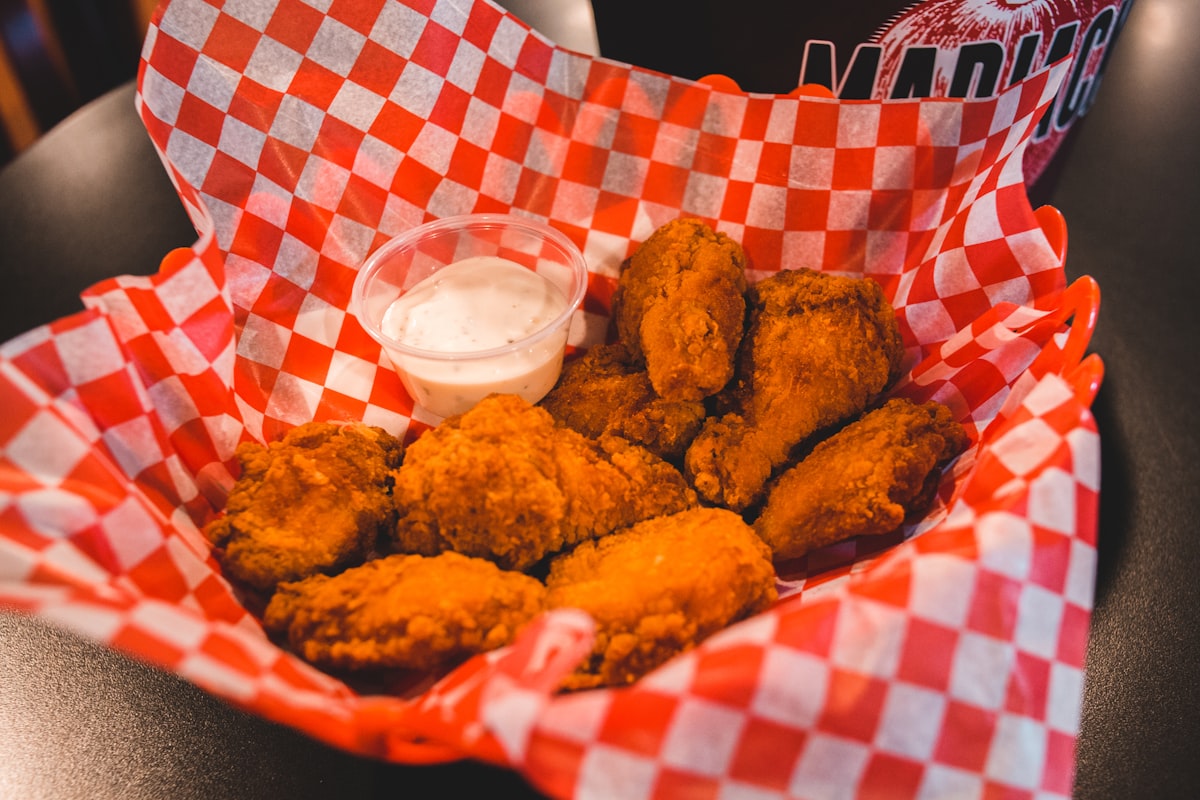
Most people make popcorn chicken by taking a fried chicken recipe and cutting the chicken smaller. It comes out too salty and too heavily breaded, and the reason is geometry rather than cooking.
A 2 cm cube has roughly three times the surface area per gram that a chicken thigh does. Same dredge, same seasoning, three times as much of it per mouthful. The seasoning has to come down or every piece tastes like a spice cabinet.
Jump to the recipe ↓KFC Popcorn Chicken
Serves 4 · Main
- Prep
- 20 min
- Cook
- 12 min
- Total
- 32 min + 1 hr marinating
Moderate10 ingredients, a technique that commonly fails
~730 kcal per servingestimated
Ingredients
- 700 g boneless chicken thighs, 2–3 cm pieces
- 240 ml buttermilk, 1 tsp salt, 1 egg
- 240 g plain flour
- 2 tbsp cornflour
- 2 tsp fine salt
- 2 tsp white pepper
- 1 tsp black pepper
- 1 tsp each garlic powder, onion powder, paprika
- 1/2 tsp each dried thyme, oregano, celery salt, ground ginger, dried mustard
- neutral oil for frying
Method
- Marinate the chicken in the buttermilk mixture for an hour.
- Whisk the dredge together.
- Drain the chicken briefly, then coat, pressing the flour on.
- Rest the coated pieces on a rack.10 minutes
- Fry at 175°C for in batches.3–4 minutes
- Drain on a rack, not paper.
The two things that change at this size
Seasoning concentration goes down. A dredge calibrated for large pieces will be overwhelming on small ones. Roughly two-thirds of the salt you would use otherwise.
Cooking time goes way down. These are done in three to four minutes. Anything longer and the outside is right while the inside has gone from cooked to dry — there is very little thermal mass to buffer you.
Thigh, not breast
Breast at this size has no margin. It goes from raw to chalky in about forty seconds of cooking time and there is no way to catch it.
Thigh meat has enough fat and connective tissue that it stays tender even if you overshoot, and it holds up to being reheated. This is the single biggest quality decision in the recipe.
What you need
For the chicken
- 700 g boneless chicken thighs, in 2–3 cm pieces
- 240 ml buttermilk
- 1 tsp salt
- 1 egg
For the dredge
- 240 g plain flour
- 2 tbsp cornflour
- 2 tsp fine salt
- 2 tsp white pepper
- 1 tsp black pepper
- 1 tsp garlic powder
- 1 tsp onion powder
- 1 tsp paprika
- 1/2 tsp dried thyme
- 1/2 tsp dried oregano
- 1/2 tsp celery salt
- 1/2 tsp ground ginger
- 1/2 tsp dried mustard
Neutral oil for frying — about 1.5 litres.
Method
- Mix the buttermilk, salt and egg. Add the chicken and refrigerate for an hour.
- Whisk the dredge ingredients together in a wide bowl.
- **Lift the chicken out of the buttermilk and let the excess drip off for a few seconds**, then drop into the dredge. Soaking wet chicken makes the flour pasty and it slides off in the oil.
- Toss to coat, pressing the flour on. Shake off what is loose.
- Rest the coated pieces on a rack for 10 minutes. The flour hydrates and turns from powder into a proper batter layer that stays put.
- Heat oil to 175°C and fry in batches for 3–4 minutes, until deep golden.
- Drain on a rack, not on paper. Paper traps steam and softens the underside.
Why the rest before frying
Dry flour on wet chicken is powder sitting on a surface. Given ten minutes, the moisture underneath wicks up into it and the whole layer becomes a dough-like skin bonded to the meat.
Fry it straight away and a portion of the coating detaches in the oil, leaving bald patches and a lot of debris in the pan.
Frying in batches
The oil drops 10–15°C when food goes in. Overload the pan and it drops far enough that the coating absorbs oil rather than sealing, which is exactly the greasy result people complain about.
Fry no more than a single layer with gaps, and let the oil come back to temperature between batches.
Storing
Three days in the fridge. Reheat at 200°C in the oven or air fryer for 5–6 minutes; the microwave turns the coating to paste.
They freeze well after frying. Straight from frozen, 200°C for 10 minutes.
Questions people ask
Why is my popcorn chicken too salty?
Small pieces carry far more coating per gram than large ones. A dredge scaled for whole pieces is roughly a third too salty at this size.
Breast or thigh?
Thigh. At 2 cm, breast goes from cooked to dry in seconds and there is no way to recover it.
Why does the coating fall off?
Either the chicken went in soaking wet, or it was fried straight after dredging. Drain briefly, then rest the coated pieces ten minutes before frying.
What oil temperature?
175°C. Hotter and the coating colours before the chicken is done; cooler and it absorbs oil.
Can I air fry it?
Yes — spray well and cook at 200°C for 10–12 minutes. It will be good, but it is a drier, less blistered coating than frying gives.
Can I freeze them?
Yes, after frying. Reheat from frozen at 200°C for 10 minutes.
This is a home reconstruction, not KFC's recipe. Their seasoning blend is a trade secret and this page does not claim to have it.
More like this
 Home reconstructionCostco Chicken Skewers: The Brine Is Doing the WorkChicken breast on a skewer should be dry by definition. The reason theirs is not comes down to salt, not marinade.
 Home reconstructionDel Taco Chicken Soft Tacos: The Tortilla Gets Fried, Not MicrowavedSteamed tortillas tear and go clammy. Ten seconds a side in a dry pan changes the whole thing.
 Home reconstructionKFC Green Beans: Tinned Beans, and Fresh Ones Will Not WorkThis is a Southern-style braise where the beans are meant to be soft. Fresh beans stay squeaky and never take on the broth.